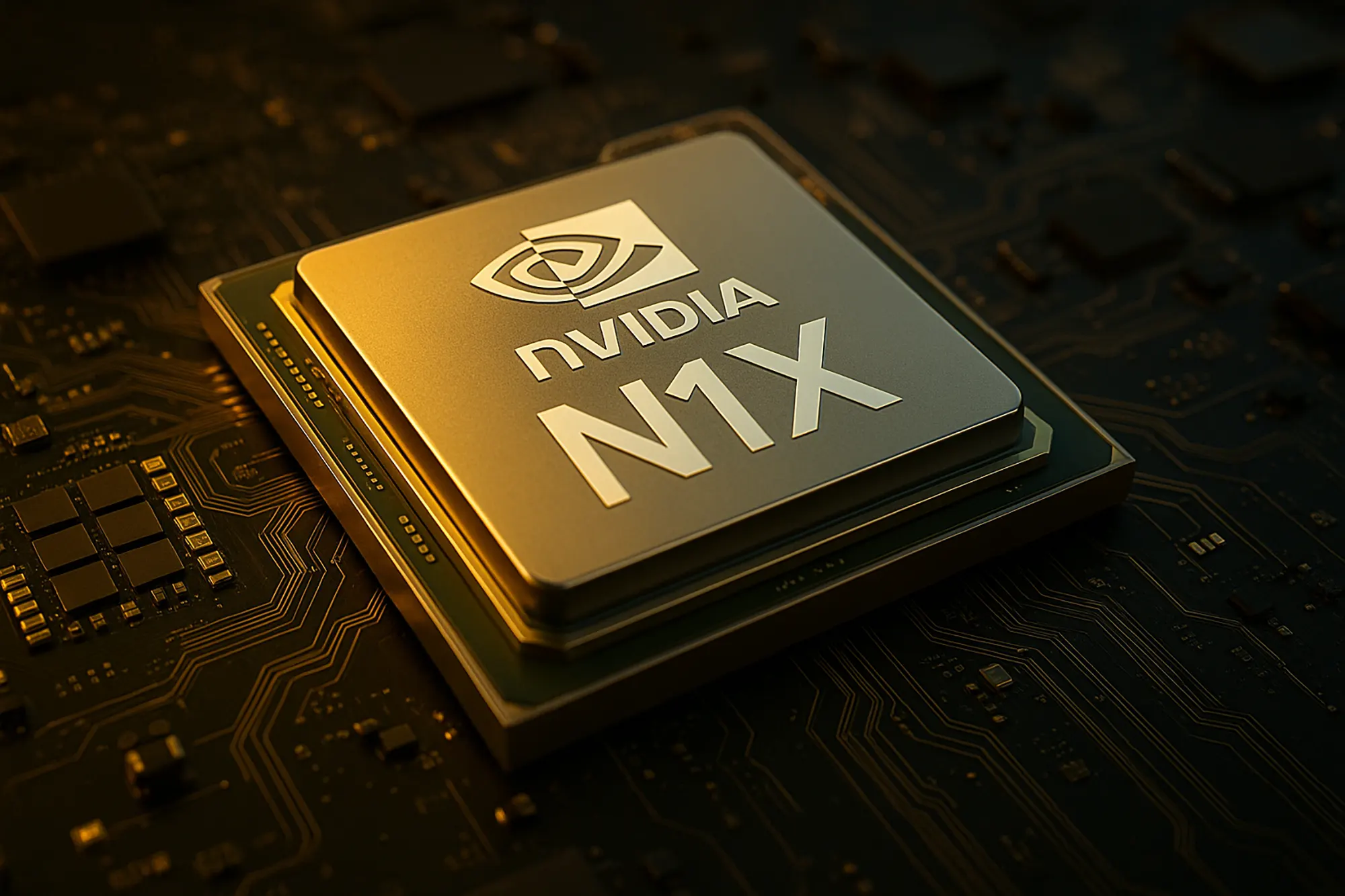
Nvidia’s much‑talked‑about N1X CPU isn’t a real, buyable product yet — but the silicon everyone expects to sit at its core does exist, and it’s already shipping inside Nvidia’s new DGX Spark personal AI systems.
That silicon is the GB10 Grace Blackwell superchip, a single package that fuses a 20‑core Arm CPU with a Blackwell‑generation GPU and a big pool of unified memory. For now it’s aimed squarely at AI developers and researchers, not gamers, but it gives us our clearest look yet at what a future “N1X‑class” Arm PC from Nvidia might actually look like.
Quick reality check: N1X is still an unofficial product name. Nvidia hasn’t announced an N1X CPU for consumer PCs, and there’s no confirmed launch date or MSRP. Everything beyond the GB10’s official specs should be treated as informed speculation.
What is NVIDIA N1X supposed to be?
In the PC community, “N1X” has become shorthand for a rumored Nvidia Arm‑based system‑on‑chip (SoC) designed for Windows and Linux desktops and laptops. The idea is simple but ambitious:
- Take the Grace‑class Arm CPU that’s already proven itself in data‑center systems.
- Pair it with a Blackwell‑generation GPU on the same package.
- Add a large pool of fast, shared memory instead of the usual split between system RAM and VRAM.
If that sounds familiar, it’s because it’s essentially what Nvidia is already shipping as the GB10 superchip in DGX Spark.
Right now, though, N1X is still a codename used in leaks and reports, not a retail product. Nvidia hasn’t put “N1X” on a spec sheet, a product page, or a box. That’s why it’s safer to talk about what’s real (GB10 + DGX Spark) and then work forward to what that could mean for future gaming PCs.
GB10 Grace Blackwell: the silicon behind the rumors
The GB10 Grace Blackwell superchip is the heart of DGX Spark, Nvidia’s new “personal AI supercomputer” that fits under (or next to) a desk instead of in a server rack.
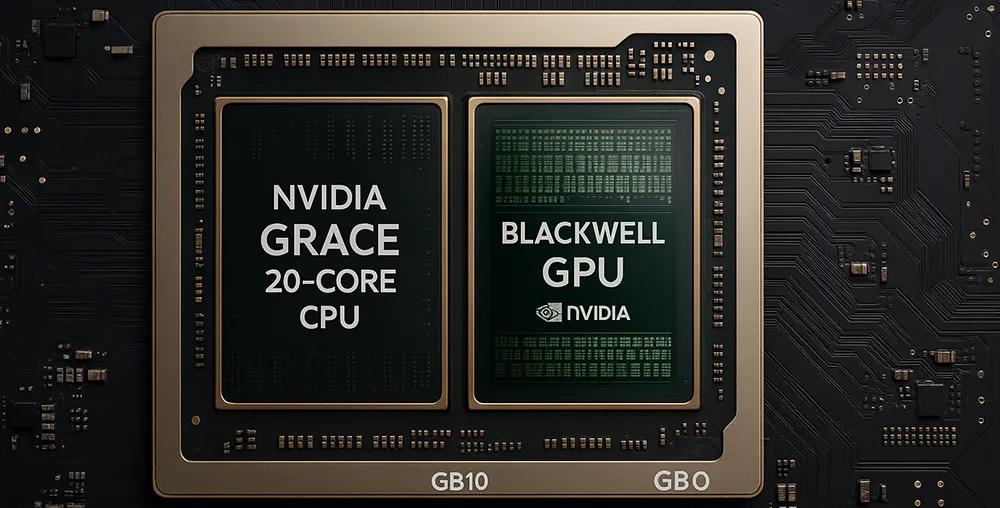
At a high level, GB10 combines:
- CPU: A 20‑core Nvidia Grace Arm CPU designed for high parallel throughput and efficiency.
- GPU: A Blackwell‑generation GPU on the same package, tuned for AI and accelerated computing.
- Memory: 128GB of unified LPDDR5X memory shared between CPU and GPU, rather than separate system RAM and VRAM.
- AI throughput: Up to 1 petaFLOP of FP4 AI performance, aimed at running large language models, diffusion models, and other heavy workloads locally.
Because CPU and GPU are on one package talking to a single pool of memory, GB10 behaves more like a console‑style APU on steroids than a traditional PC with a separate CPU and graphics card. That’s exactly the kind of design people expect from any future N1X‑branded chips.
Key confirmed specs (GB10 Grace Blackwell)
Verified against Nvidia and partner documentation as of December 9, 2025; anything not listed here should be treated as unconfirmed:
- Architecture: Grace CPU + Blackwell GPU superchip
- CPU cores: 20 Arm cores
- Memory: 128GB unified LPDDR5X
- Form factor: Single SoC module (used inside complete systems like DGX Spark)
- Target use‑cases: Local AI development, fine‑tuning, inference, and creative workloads
Notice what’s missing: no official gaming performance numbers, no clock speeds, no core counts for the GPU side, and no “N1X” branding anywhere. That’s important context any time you see headline claims about “N1X benchmarks” or “confirmed specs.”
Why PC gamers are paying attention
Even without consumer branding, GB10 points to a clear direction for Nvidia’s PC strategy: AI‑first Arm systems that blur the line between workstation and gaming rig.
Here’s why that matters if you play games on PC:
AI workloads are moving local. With 1 PFLOP‑class AI performance and a big unified memory pool, GB10 can run large models directly on the desktop. That’s exactly the kind of hardware that could power:
- Smarter NPCs and companions (think Nvidia ACE‑style characters built into games).
- Real‑time level generation similar to what we’re already seeing from experimental platforms.
- Generative tools for creators and modders baked into the PC itself.
If you want a taste of where this is going, check out EG Gear’s coverage of Nvidia ACE’s autonomous NPC tech and real‑time AI level generation.
Unified memory can simplify game design. Instead of developers juggling “system RAM vs VRAM” budgets, future N1X‑style chips could offer a single pool of fast memory. That doesn’t magically fix performance bottlenecks, but it removes a lot of the plumbing headaches and could help with texture streaming, big open worlds, and AI systems that need to touch everything.
Arm PCs are getting serious. Between Windows on Arm improvements and Nvidia’s own push with Grace, it’s clear the industry sees Arm as more than just a tablet and phone architecture. If N1X eventually ships in gaming laptops or desktops, it could give us:
- Better efficiency at the same performance.
- Cooler, quieter small‑form‑factor builds.
- New “AI PC” designs where background models run constantly without pegging the CPU and GPU.
That said, none of this is guaranteed for gaming yet. GB10’s first home is DGX Spark, a machine pitched at AI developers and enterprise users, not FPS players.
Availability and pricing: what you can actually buy today
Here’s the grounded part:
- GB10 today lives inside complete systems like Nvidia DGX Spark. Those are sold through Nvidia and its partners as personal AI supercomputers — think data‑center tech shrunk for a desk, not a mainstream gaming tower.
- Pricing is configuration‑dependent and very much “pro hardware” territory. Nvidia positions DGX Spark as a tool for AI teams, researchers, and serious independent developers, not as a budget‑friendly gaming box.
- There is no standalone “N1X CPU” product with an official price tag, retail box, or SKU you can order from a PC retailer yet.
- There are no announced gaming laptops or desktops using an N1X‑branded chip as of December 9, 2025. If you see a pre‑order or listing claiming otherwise, assume it’s either a mislabel, a placeholder, or relying on leaks rather than official info.
In other words: if you’re a gamer building or upgrading a rig right now, you’re still choosing between x86 CPUs plus dedicated GPUs. For Nvidia hardware, that still means pairing a Ryzen or Intel processor with a GeForce graphics card like the RTX 5090 or RTX 4080‑class GPUs.
Should you wait for N1X for your next gaming build?
Short answer: probably not, unless you’re specifically interested in being an early adopter of Arm‑based PCs and you’re comfortable waiting on something that hasn’t been announced yet.
A more nuanced take:
- If you need a new gaming PC in the next 6–12 months, buy what’s real today. The current generation of CPUs and GPUs already delivers fantastic performance at 1440p and 4K, plus excellent support for AI‑driven features like DLSS.
- If you’re a developer or researcher who wants hands‑on time with Nvidia’s Grace Blackwell hardware, DGX Spark (or cloud instances using similar silicon) makes sense to evaluate — just don’t expect it to double as a value‑focused gaming tower.
- If you just like following bleeding‑edge tech, keep N1X on your radar, but filter every “leak” through what we know about GB10:
- A 20‑core Grace CPU plus a Blackwell GPU and 128GB unified memory is a powerful combination.
- It’s designed around AI and accelerated compute first, gaming second.
- Any consumer N1X‑style product will have to juggle price, power, and compatibility in ways the current DGX Spark doesn’t have to.
The bottom line
Right now, “NVIDIA N1X CPU” is more of a concept shorthand than a shipping product: a way for people to talk about the idea of a Grace‑plus‑Blackwell Arm PC.
What’s real — and genuinely exciting — is the GB10 Grace Blackwell superchip in DGX Spark, which proves Nvidia can put a powerful Arm CPU, next‑gen GPU, and a big pool of unified memory into a compact, desk‑friendly system.
For gamers, that means:
- You don’t have anything to buy yet with N1X on the box.
- The most important decisions you can make today still revolve around proven hardware — CPUs from AMD/Intel and GPUs like Nvidia’s RTX 40‑ and 50‑series cards.
- Over the next few years, you should watch how Nvidia moves Grace Blackwell‑style designs from developer‑focused machines like DGX Spark toward more mainstream “AI PCs.”
When (or if) Nvidia turns the N1X concept into an official CPU for gaming desktops and laptops, we’ll be ready to dig into real benchmarks, compatibility testing, and build recommendations. Until then, treat the leaks as speculation, keep your eyes on GB10‑powered systems, and build your next rig around the hardware you can actually put in a shopping cart today.
 Terms | Privacy | Feedback